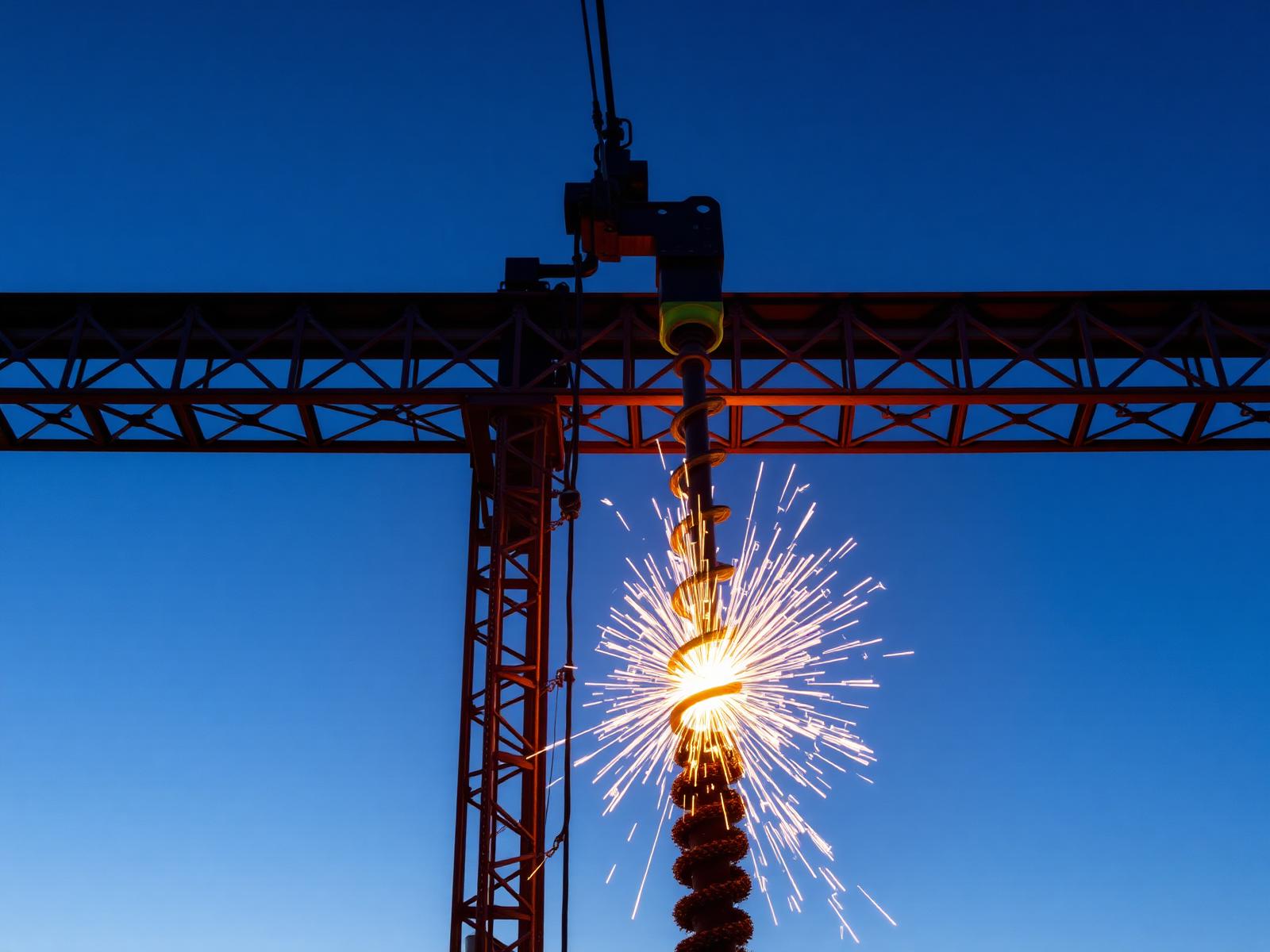
Ask ten people on a jobsite what holds a building up and most will say concrete. The real answer, on a growing share of projects across North America, is a steel shaft with a plate welded to it, screwed into the earth like a giant bolt. This guide covers what helical piles are, how they carry load, how they are installed, and the situations where they consistently beat poured concrete.
01How Do Helical Piles Work?
A helical pile works on a simple principle: bypass the weak soil near the surface and deliver the structure's weight to the strong soil below it.
The surface layers of most sites are the problem layers. Topsoil, fill, clay that swells and shrinks with moisture, sand that shifts, soil that freezes and heaves every winter. Shallow foundations sit in this zone and move with it. That movement is what cracks slabs, racks door frames, and opens stair-step cracks in block walls.
A helical pile drives straight through that zone. As the shaft rotates, the helix plates pull the pile downward, the same way threads pull a screw into wood. Installation continues until the plates seat in competent load bearing soil, which might be 10 feet down or 40, depending on the site. From that point on, the structure's weight travels down the shaft and spreads into stable ground through the helix plates.
The same geometry works in reverse. Because the plates are anchored in deep soil, helical piles resist uplift and tension nearly as well as they resist compression. That is why they anchor retaining walls, transmission towers, and solar arrays that wind tries to peel off the ground, not just buildings pressing down.
02The Anatomy of a Helical Pile
Every helical pile system has four working parts:
The lead section. The first piece into the ground. It carries the helix plates, typically one to three of them, sized and spaced to match the soil profile. Plate diameter and count are engineering decisions, not catalog defaults; a pile for soft clay looks different from a pile for dense sand.
The shaft. The steel backbone that transmits load. Shafts run from 2-7/8 inches in diameter for residential work up to 10-3/4 inches for heavy industrial and commercial loads. Round shaft, square shaft, and combination configurations each have their place depending on soil and load type.
Extensions. Plain shaft segments added one at a time as the pile advances, until the helix plates reach competent soil. Depth is driven by the soil report, not guesswork.
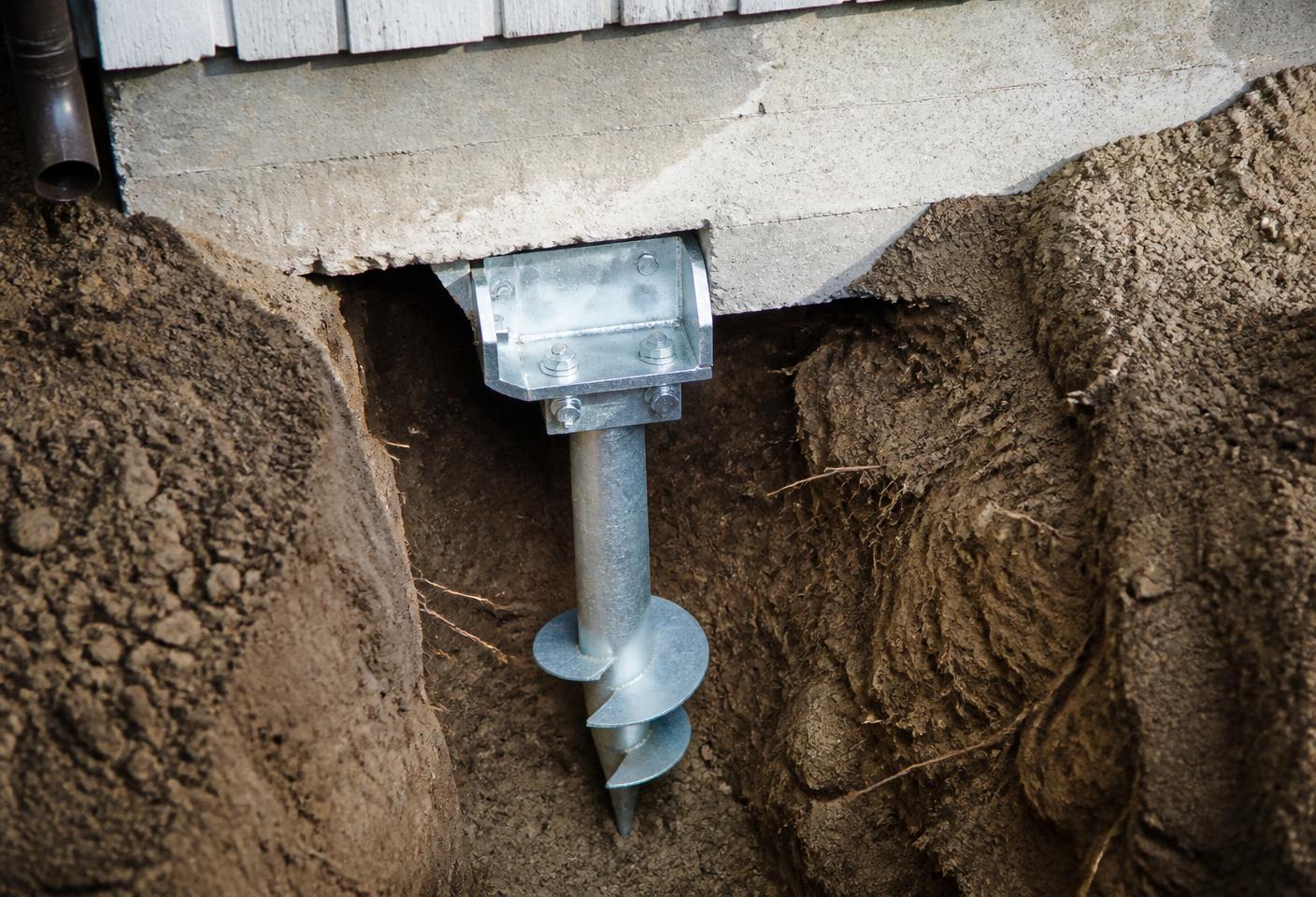
The bracket or cap. The connection between pile and structure. New construction caps tie into footings and grade beams. Underpinning brackets clamp to existing foundations and transfer a settling structure onto the new piles.
The weak point in most manufacturers' piles is none of these parts. It is the weld between them. Where the helix plate meets the shaft, a conventional gusset weld introduces filler metal and a heat affected zone, and that is where piles fail under torque. Helical Anchors solved this with patented inertia welding (US 8,777,520), a friction weld that fuses plate to shaft with no filler metal and roughly twice the shear strength of a conventional weld.
03How Are Helical Piles Installed?
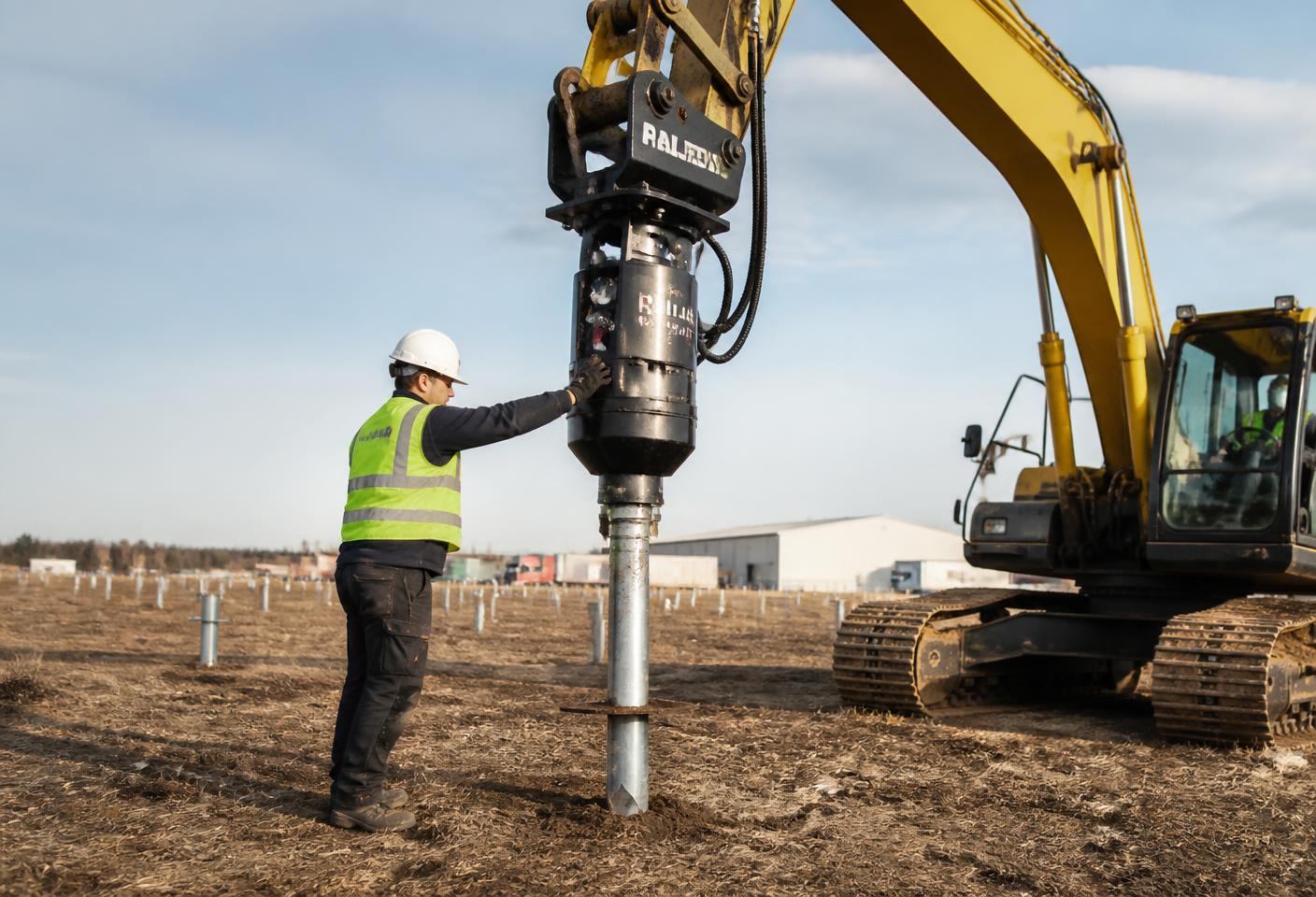
Installation is fast, quiet, and nearly vibration free. A hydraulic drive head, mounted on anything from a mini excavator to a large drill rig, rotates the pile into the soil. No excavation, no spoils to haul, no concrete truck, no cure time.
The part engineers care about most: torque monitoring. Installation torque correlates directly with soil capacity, so the crew is effectively load testing the pile as it goes in. When the pile hits the specified torque, it has verified capacity, documented on the spot. A poured footing cannot tell you what it will hold. A helical pile just did.
A typical residential underpinning pile installs in under an hour. Full structural loads can be applied immediately, the same day. On new construction, that regularly pulls one to two weeks out of the schedule compared to drilled and poured foundations.
04Helical Piles vs. Concrete: The Short Version
Concrete foundations need excavation, forming, pouring, and cure time, and their real world capacity is assumed from design rather than verified in the ground. Helical piles need none of the first four and give you the fifth automatically.
That does not make concrete obsolete. It makes concrete the default that helical piles beat in specific, common conditions: bad surface soils, tight access, cold weather, compressed schedules, and any project where load verification matters. For a full breakdown, read our comparison of helical piles, driven piles, and drilled shafts.
05Where Helical Piles Win
Helical piles carry everything from a backyard deck to a refinery expansion. The pattern across all of it: they win wherever surface soil is unreliable, access is tight, or the schedule is unforgiving.
Foundation repair and underpinning. The largest use case in North America. Settling homes and commercial buildings are transferred onto piles seated in stable soil, permanently, often in a day or two, without excavating the yard.
Residential construction. Decks, additions, porches, and full new builds. In northern climates, piles seat below the frost line, which ends the freeze and heave cycle that destroys poured deck footings.
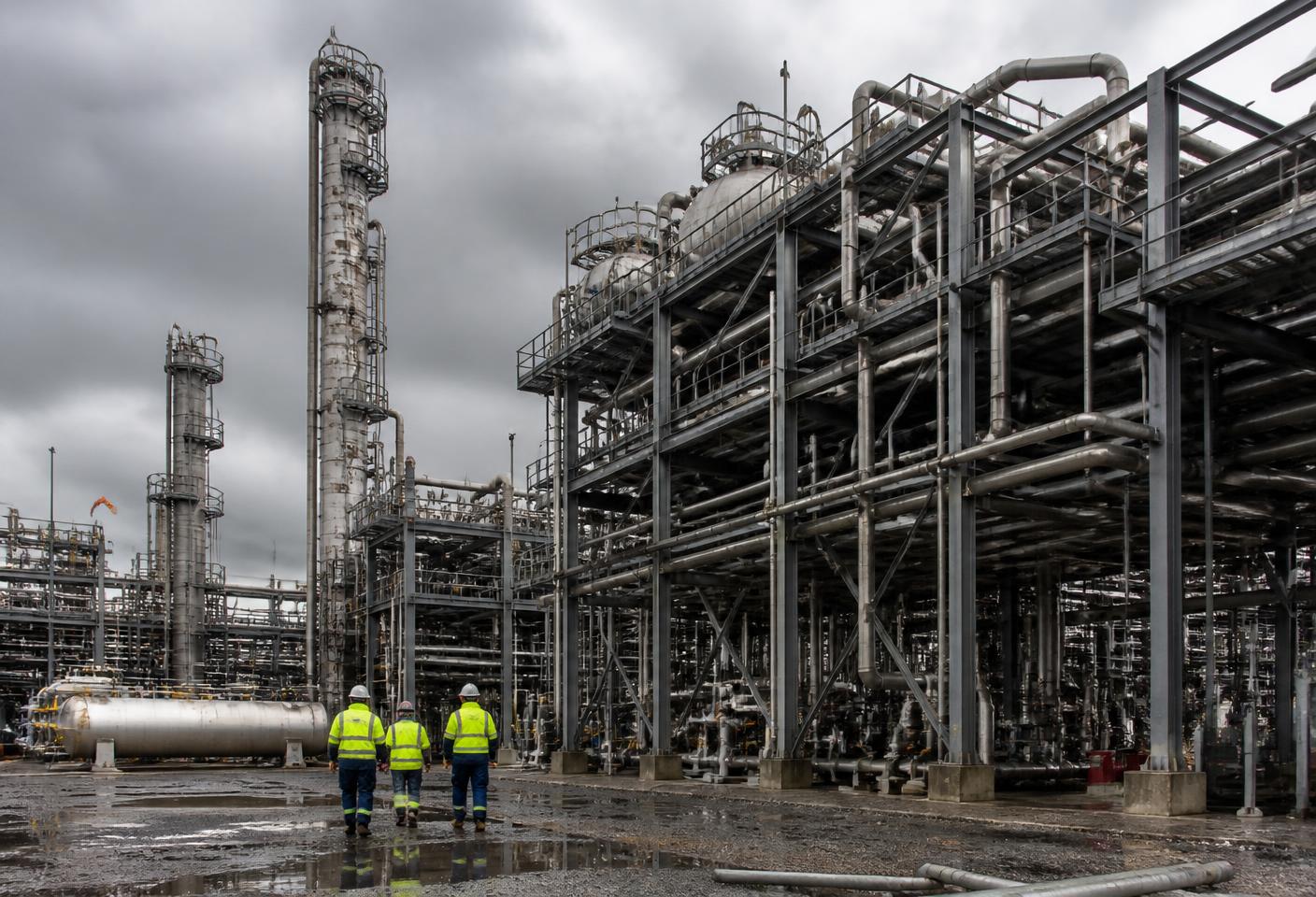
Commercial and industrial. Mid rise structures, equipment foundations, tank farms, and plant expansions, where 48 hour mobilization and same day loading keep schedules intact.
Solar and utility. Ground mount arrays and transmission structures, where thousands of piles install without a single concrete truck and resist decades of wind uplift.
06How Much Weight Can a Helical Pile Hold?
Working capacities run from roughly 10,000 pounds for light residential piles to 200,000 pounds and beyond per pile for large diameter industrial configurations. Capacity is a function of shaft size, helix configuration, and soil strength, which is why every Helical Anchors pile is sized to the project's soil report rather than pulled from a shelf.
For service life, hot dip galvanizing to ASTM A123 protects the steel in aggressive soils, with design life exceeding 75 years.
07Why the Manufacturer Matters
Two helical piles can look identical on a spec sheet and behave very differently under torque. What separates them is what happens on the factory floor: the weld, the steel, the testing.
Helical Anchors manufactures in Minneapolis, Minnesota, under ISO 9001, with ICC-ES ESR-3982 code listing, destructive batch testing, and the patented inertia weld running through the entire product line. Twenty plus years and more than 250,000 piles shipped is the track record behind the numbers.
Frequently Asked Questions
In poor surface soils, cold climates, tight access sites, and compressed schedules, yes. Helical piles install in hours with no cure time and verified capacity. Concrete remains reasonable where soils are strong at shallow depth and time is not a constraint.
As deep as it takes to reach competent load bearing soil. Most piles seat between 10 and 30 feet, though some sites require more. The soil report, not a fixed number, sets the depth.
Galvanized helical piles are engineered for a service life beyond 75 years. Hot dip galvanizing to ASTM A123 protects the steel even in aggressive, corrosive soils.
Yes. Frozen ground and cold temperatures that shut down concrete work do not stop helical pile installation, which is one reason they dominate in northern climates.
Yes. Underpinning with helical piers is the most common repair for settled foundations. Brackets attach to the existing footing and transfer the structure onto piles seated in stable soil.